Inspect drainage before the first freeze
Walk the site after rain and identify puddles, blocked outlets and runoff that reaches the stone from roofs or higher ground. Clear leaves and debris from the drainage route. Have damaged joints, loose pieces and deteriorated transitions assessed by the installer before freezing conditions make repairs more difficult.
Include the base of stone walls in this inspection. Splash, overflowing gutters and snow piled against a wall may repeatedly wet one area. Record photographs so the maintenance team can distinguish an existing issue from a later change. A sound-looking stone face does not show every condition behind it.
Agree how snow will be removed
Discuss compatible tools and equipment with the paving installer. Review blade contact, protective edges and equipment loading for the installed surface. Avoid treating hand-laid natural stone like an unspecified industrial pavement. Raised joints, irregular faces and edges may need a different approach.
Decide where cleared snow will be stored. Keep drainage outlets open and avoid creating a meltwater path back toward doors or vulnerable wall bases. Remove loose debris before it becomes hidden under snow. Safety and access remain the priority, so the winter plan should be agreed before icy conditions arrive.
Choose deicers with material compatibility in mind
Do not assume a product described as “safe” for concrete, plants or pets is safe for your stone and mortar. Ask the stone and installation-material suppliers for written guidance on the proposed deicer. Repeated exposure, dosage and moisture conditions can matter alongside the chemical itself.
The Natural Stone Institute has investigated damage to stone under combinations of deicing chemicals and environmental cycling. That supports a product-specific maintenance decision rather than a universal recommendation for one salt. Discuss any traction material with the maintenance contractor as well, including possible scratching and residue.
Use sealers and cleaners for a defined purpose
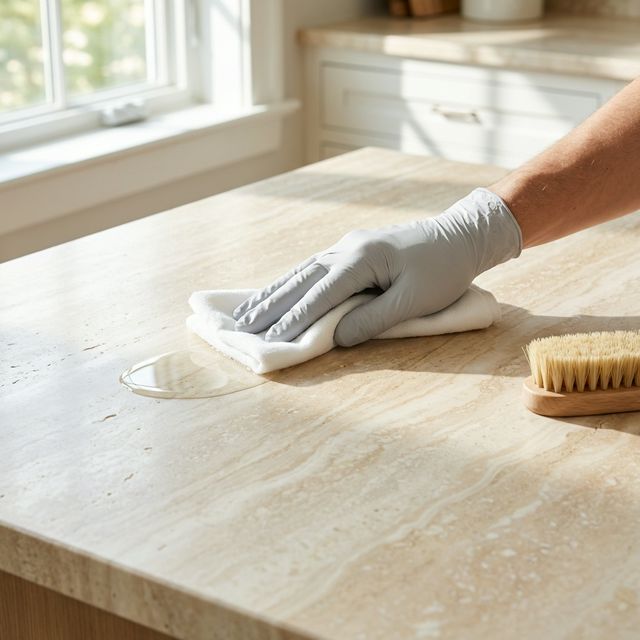
A sealer is not a replacement for drainage or a repair for an unsuitable installation. First identify what problem a treatment is meant to address: staining, appearance or a specific maintenance concern. Confirm compatibility with the stone, mortar, backing and exposure, then trial it in an inconspicuous area or on a spare sample.
For routine care, follow the stone supplier’s cleaning instructions. Avoid selecting a cleaner solely because it removes a stain from another surface. Acidic products can affect calcareous materials, and aggressive treatments may change the finish. Our general stone care guide covers the broader maintenance conversation.
Make the spring inspection useful
After winter, photograph new surface changes and note where they occur. Is the issue concentrated beside a road, under a downpipe or at a poorly draining joint? Record the maintenance products used and their application history. This helps the supplier and installer investigate rather than guessing from one close-up image.
Keep a small stock of approved spare pieces where practical and record their batch with the project files. When specifying a new project, read the freeze–thaw selection checklist so the maintenance plan starts during design, not after the first winter.