Two products share the name “thin stone veneer”
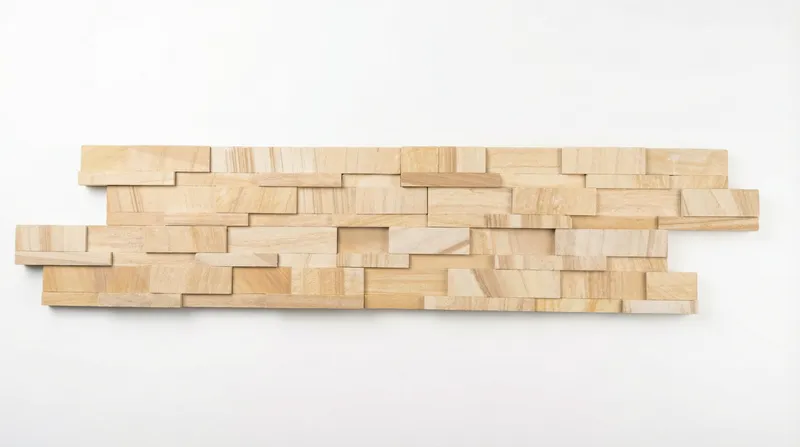
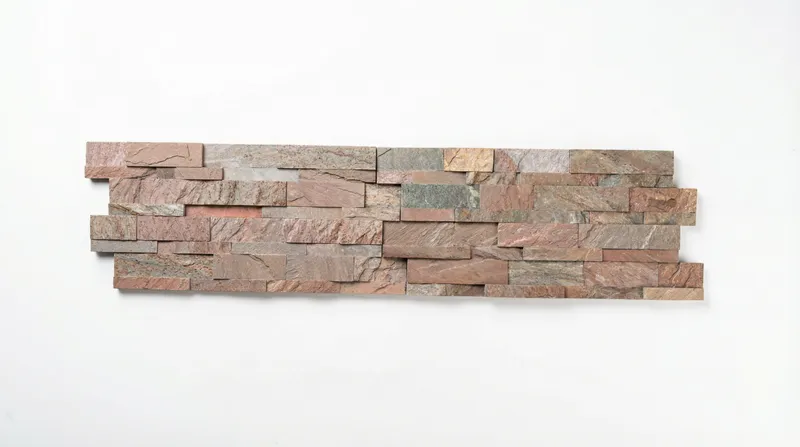
US buyers use “thin stone veneer” for more than one construction. Rigid veneer consists of individual stone pieces or assembled panels with a reduced bed depth. Flexible veneer combines a thin natural stone face with a backing. The backing, adhesive and joint treatment form part of its performance; the face stone alone does not describe the product.
Roop Stone Impex makes rigid natural stone pieces and flexible panels, including custom patterns. The veneer collection explains these options separately. Send the design reference and intended use so the quotation identifies which construction is being offered.
Use example thicknesses to start a discussion, not to order
Published examples from other manufacturers show rigid ledgestone at about 1 inch (25 mm), while a flexible veneer datasheet lists approximately 1.5–2.5 mm total thickness. These examples illustrate the large difference between product types. They are not Roop Stone Impex specifications, a universal standard or interchangeable wall systems.
For a custom order, confirm total thickness, relief depth, backing, unit weight, panel size and tolerances on the approved drawing. A sculptural surface can have a shallow back and a much deeper face. Ask whether a stated dimension measures the backing, average bed depth or highest point of the texture.
Check the whole exterior assembly for winter exposure
A flexible panel intended for an interior feature wall should not be substituted into an exposed freezing facade without the required product and assembly approval. Likewise, a rigid natural stone face does not establish the suitability of a mesh, resin, mortar or adhesive behind it. Review temperature range, moisture exposure, bond, movement and substrate compatibility together.
Have the wall designer coordinate the water-resistive layer, drainage, flashings and transitions. Plan what happens at the bottom of the veneer, at windows and above doors. Water that enters at an unfinished top edge can affect a far larger area than the visible opening.
Choose a pattern that can be detailed consistently
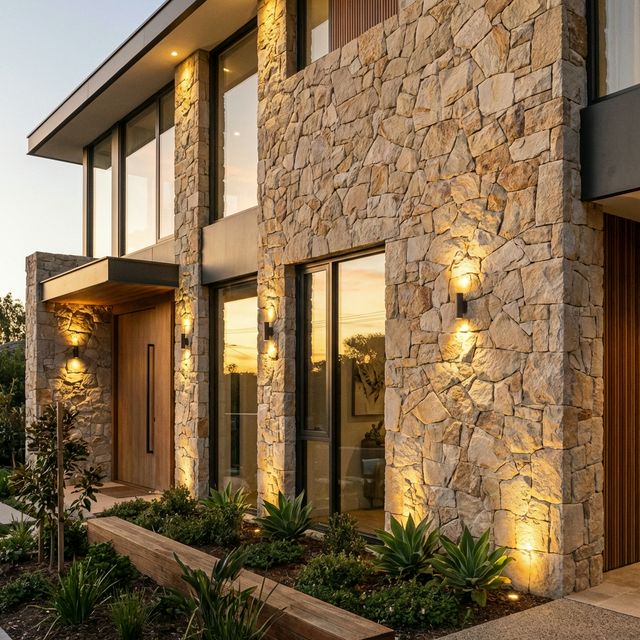
Linear panels create horizontal courses; random or crazy-pattern stone uses irregular outlines and a less repetitive composition. Both can work in high-end architecture, but their setting-out and joint decisions differ. Request a sufficiently large dry layout or mock-up to see repeated shapes, color distribution and corner transitions.
Where a facade turns a corner, decide whether the design uses purpose-made corner pieces, returns or a documented joint detail. Avoid showing a thick-looking stone edge in a rendering if the supplied assembly has a different edge construction. Approve the physical sample with the drawing.
What to include in a veneer enquiry
- Rigid individual pieces, assembled panels or flexible sheets.
- Interior, sheltered exterior or fully exposed exterior location.
- Stone color and desired panel or random-pattern reference.
- Substrate, attachment method, thickness and weight constraints.
- Flat area, corners, openings, returns and custom caps.
- Destination, programme, sample requirements and requested documentation.
Keep each product type on its own quote line. This makes it possible to compare the supplied construction and packing, instead of comparing two prices for products that happen to share the word “veneer.”