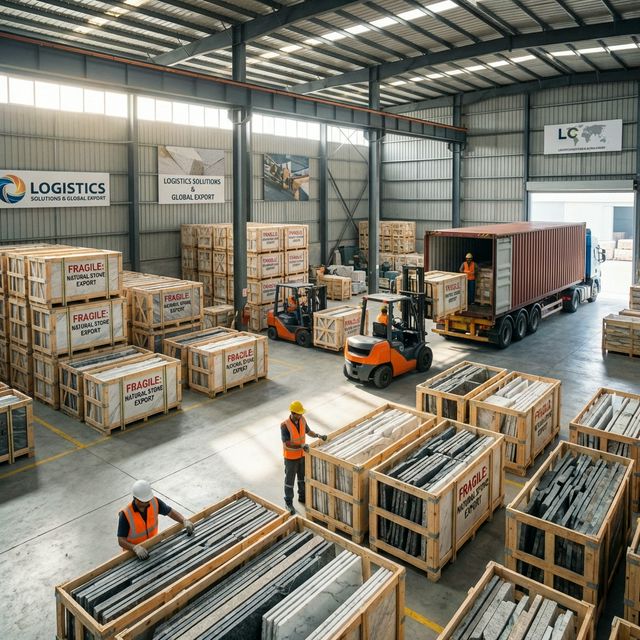
For B2B stone importers, architects, and bulk buyers across the UK, USA, and Australia, supply chain optimization is the key to maintaining a competitive edge. Sourcing Indian natural stone direct from the manufacturer represents the highest tier of procurement strategy, bypassing middlemen to secure superior margins and unparalleled quality control.
The Hidden Costs of Indirect Sourcing
When you purchase natural stone through domestic wholesalers or third-party exporters, you are absorbing multiple layers of markup. Worse, you lose transparency into the quarrying and fabrication processes. Middlemen often consolidate stone from various smaller, unverified suppliers to fill a container, resulting in inconsistent thickness, color mismatches, and varying structural integrity.
The Direct Manufacturing Advantage
A true Indian natural stone manufacturer controls the supply chain from the quarry block to the shipping crate. Here is why direct sourcing is critical for serious commercial players:
1. Uncompromised Quality Control
Direct manufacturers execute on-ground quality control. At Roop Stone Impex, we monitor every stage—from the initial extraction in Rajasthan’s premier quarries to the final finishing on our CNC machinery. We verify flexural strength, moisture content, and dimensional calibration before a single piece is crated. This eliminates the dreaded 15% breakage rate that plagues indirect imports.
2. The Power of Mixed Containers
One of the largest hurdles for growing B2B stone importers is cash flow tied up in inventory. Purchasing an entire container of a single stone variant involves high risk. Direct manufacturers like us address this by offering mixed containers. You can specify a precise combination of Kandla Grey Sandstone, Deoli Green Quartzite, and Silver Shine, perfectly tailored to your current project demands without overcommitting capital.
3. Custom Fabrication Capabilities
Standard sizes do not always fit bespoke commercial projects. Direct sourcing means you communicate directly with the factory floor. Need a specific 40mm thickness for a commercial plaza? Or a unique brushed-and-tumbled finish for a heritage restoration? A primary manufacturer handles these custom requests seamlessly without the "translation errors" caused by intermediaries.
Establishing a Direct Supply Pipeline
Transitioning to direct sourcing involves due diligence. Verify that your prospective supplier possesses direct quarry access and in-house manufacturing capabilities, rather than just an export license. Request detailed videos of their fabrication processes and crating techniques.
Conclusion
Sourcing Indian natural stone direct from the manufacturer is not merely a cost-saving tactic; it is a profound upgrade to your product offering. By partnering directly with the source, you ensure consistent quality, access custom fabrication, and leverage flexible shipping options like mixed containers. It is the definitive strategy for dominating your local natural stone market.