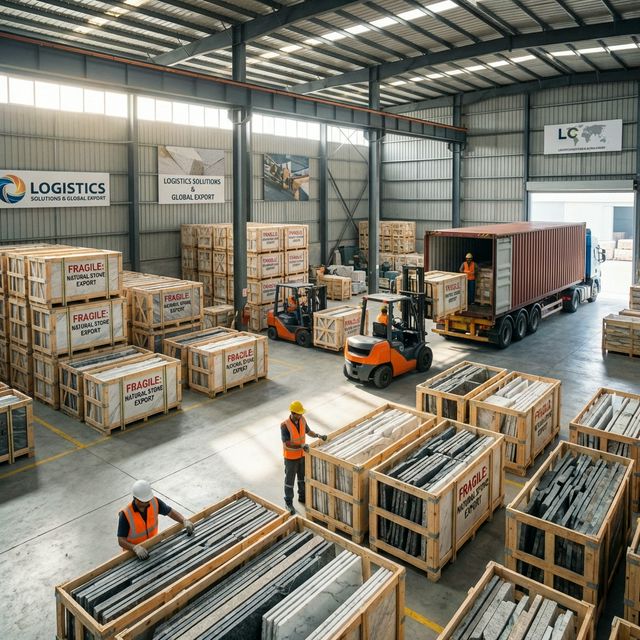
The average breakage rate for natural stone during international shipping is 12 to 18 percent. That means for every container of stone shipped, up to one fifth of the material arrives damaged and unusable. This represents not just a financial loss but delays, disputes, and project setbacks that ripple through the entire supply chain.
At Roop Stone Impex, we have maintained zero-damage deliveries for over four decades. Our 14-point packing protocol, refined through 43 years of export experience, ensures that every slab, tile, and piece of cladding arrives at its destination in perfect condition.
Why Stone Breaks During Transit
Understanding the causes of breakage is the first step to preventing it:
- Insufficient cushioning: Stone needs proper padding between layers and around edges
- Poor load distribution: Uneven weight distribution causes shifting during transport
- Moisture damage: Wet stone is more vulnerable to cracking in cold conditions
- Vibration: Ocean freight subjects containers to constant vibration for weeks
- Handling damage: Loading and unloading without proper equipment causes edge chipping
The Roop Stone Impex 14-Point Packing Protocol
Pre-Packing Quality Check
- Visual inspection: Every piece is individually checked for pre-existing cracks or chips
- Dimensional verification: Confirming thickness consistency to prevent uneven stacking
- Moisture testing: Ensuring stone is adequately dry before packing
Primary Packing
- Foam padding: High-density foam sheets between every stone layer
- Edge protection: Corner guards on all exposed edges
- Individual wrapping: Premium stones individually wrapped in protective film
Secondary Containment
- Wooden crating: Sturdy wooden crates built to exact dimensions
- Internal bracing: Cross-braces within crates to prevent movement
- Weight distribution: Heavier pieces placed at the bottom with graduated layering
Container Loading
- Load planning: Pre-calculated loading sequence for optimal weight distribution
- Securing: Crates secured with ratchet straps and blocking to prevent shifting
- Gap filling: Air bags and dunnage used to eliminate empty spaces
Final Checks
- Weather sealing: Plastic wrapping to protect against moisture during ocean transit
- Documentation: Photographic record of packing process for quality assurance
What to Ask Your Supplier About Packing
Before placing an order with any stone supplier, ask these critical questions:
- What is your historical breakage rate for international shipments?
- Do you use wooden crating or just cardboard boxing?
- Do you provide photographic documentation of the packing process?
- What is your policy for damaged goods on arrival?
- Do you supervise container loading personally?
The Cost of Getting It Wrong
A single container of premium quartzite can be worth $15,000 to $40,000 USD. At the industry average breakage rate, that is $1,800 to $7,200 in damaged material per container, not including the cost of replacement shipping, project delays, and strained client relationships. Investing in a supplier with proven packing expertise is not an expense; it is insurance.