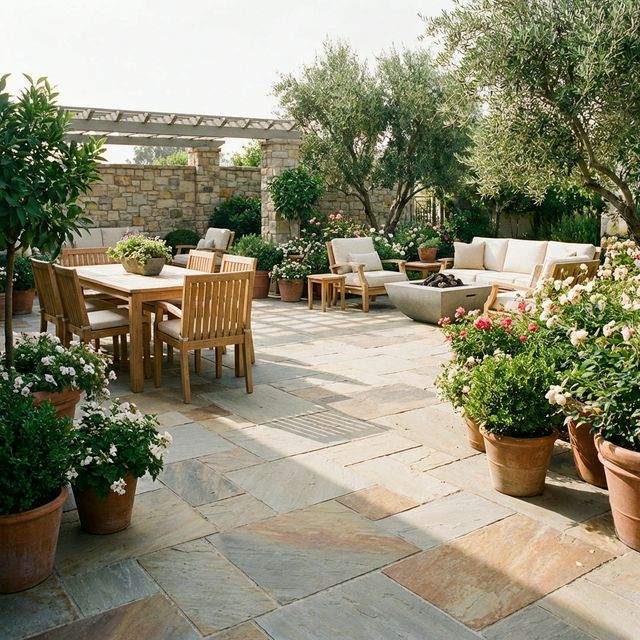
Indian sandstone has become the preferred choice for patios, driveways, and garden paths across the United Kingdom, United States, and Australia. Its natural warmth, incredible variety, and competitive pricing make it an unbeatable option for outdoor spaces. But with dozens of varieties and finishes available, how do you choose the right one?
Why Indian Sandstone?
India produces some of the finest sandstone in the world, primarily from the quarries of Rajasthan. The geological conditions in this region have created sandstone with exceptional density, color variety, and durability that rivals stone from any other source worldwide.
- Natural beauty: Each slab features unique veining and color variation
- Durability: Properly selected Indian sandstone lasts 30 to 50 years or more
- Value: Competitive pricing compared to European and American alternatives
- Variety: Over 20 distinct color options from a single region
Popular Indian Sandstone Varieties
Kandla Grey
The most popular Indian sandstone in international markets. Its consistent cool grey tones complement modern architecture perfectly. Kandla Grey works beautifully for contemporary patios, commercial plazas, and pool surrounds. Its neutral palette pairs well with any landscape design.
Autumn Brown
Rich chocolate and amber tones make Autumn Brown a favourite for traditional gardens and rustic settings. The warm color palette creates an inviting atmosphere that deepens with age, developing a beautiful patina over time.
Teakwood (Teak)
Named for its resemblance to teak wood grain, this sandstone features golden and yellow tones with distinctive linear veining. Teakwood brings natural warmth to any patio and creates a unique visual texture that manufactured pavers simply cannot replicate.
Rainbow
Perhaps the most dramatic Indian sandstone, Rainbow features swirling patterns of violet, plum, orange, and gold. Each slab is a work of natural art. It is ideal for feature areas, garden focal points, and artistic installations where you want the stone itself to be the centrepiece.
Dholpur Beige
A classic cream and beige sandstone that has adorned Indian architecture for centuries. Dholpur Beige offers a clean, timeless look that suits both modern minimalist and classical designs. Its light color helps keep surfaces cooler in warm climates.
Selecting the Right Thickness
Thickness matters enormously for sandstone paving durability:
- 18mm to 22mm: Suitable for pedestrian patios with a solid mortar bed
- 25mm to 30mm: Standard thickness for most residential paving applications
- 35mm to 50mm: Required for driveways and areas with vehicular traffic
Quality Checks Before You Buy
Not all Indian sandstone is created equal. Here is what to verify before placing an order:
- Water absorption rate: Should be under 5% for outdoor paving
- Flexural strength: Test results should be provided by your supplier
- Calibration: Consistent thickness across all slabs prevents uneven laying
- Color consistency: Request photos of the actual batch, not just catalogue images
- Frost resistance: Essential for cold climates, ask for freeze-thaw test certificates
Installation Tips
Proper installation is crucial for longevity. Always lay sandstone on a compacted sub-base with a mortar bed. Use a flexible grout to accommodate natural thermal expansion. Ensure proper drainage with a slight gradient away from buildings. Allow the stone to "breathe" by avoiding impermeable sealers on the underside.
Conclusion
Indian sandstone paving offers an unmatched combination of natural beauty, durability, and value. By choosing the right variety, ensuring proper quality checks, and working with an experienced supplier like Roop Stone Impex, you can create outdoor spaces that will be enjoyed for decades.